How to Choose a Satisfying Restaurant Meal With Balance and Flexibility

Key Takeaways
- Build a meal around vegetables, protein, and a carbohydrate that feels satisfying.
- Use menu descriptions to compare cooking methods, sauces, and toppings.
- Adjust portions to match your appetite rather than treating every entrée the same way.
- Ask direct questions about ingredients and preparation when allergies or restrictions are involved.
- Use calorie and nutrition information as one decision-making tool, not the only one.
Table of Contents
- Why Meal Balance Matters
- Start With Vegetables
- Add a Satisfying Protein
- Choose Carbohydrates With Purpose
- Check the Cooking Method
- Manage Portions Without Stress
- Handle Allergies and Dietary Needs
- Use Menu Information Wisely
- Try Simple Meal Formulas
- Make Room For Enjoyment
Eating at a restaurant does not have to mean following rigid food rules or turning every order into a nutrition project. A satisfying meal can make room for fresh ingredients, favorite flavors, convenience, and the people at the table. Browsing organic menu options before you arrive can also make it easier to spot dishes that fit your appetite and preferences.
The most useful approach is balance, not perfection. A meal that includes vegetables, protein, a satisfying carbohydrate, and flavors you genuinely enjoy is often easier to feel good about than an order built around restriction. Your hunger level, schedule, activity, culture, and dietary needs all matter.
Why Meal Balance Matters
Balance is more practical than sorting food into “good” and “bad” categories. A restaurant meal may be lighter, richer, quicker, celebratory, or somewhere in between. Instead of trying to control every ingredient, consider whether the meal has enough variety to provide energy and keep you comfortably full.
For diners managing celiac disease or avoiding wheat by preference, planning ahead can reduce uncertainty. Looking for gluten-free dining choices before a visit gives you time to review options and prepare questions for restaurant staff.
Start With Vegetables
Vegetables are an easy starting point because they add color, texture, and variety to nearly every type of meal. They can appear in salads, soups, grain bowls, omelets, sandwiches, wraps, side dishes, and main courses. The variety of vegetables recommended in everyday eating can include leafy greens, tomatoes, peppers, mushrooms, squash, broccoli, and beans.
Choose at least one vegetable-focused part of the order when possible. A side salad, roasted vegetables, vegetable soup, or extra produce in a bowl can complement a richer entrée without taking away from the experience. Raw vegetables bring crunch, while cooked vegetables can add warmth and deeper flavor.
Add a Satisfying Protein
Protein can help turn a snack-like order into a more substantial meal. Options include eggs, poultry, seafood, meat, yogurt, beans, lentils, tofu, nuts, seeds, and soy foods. The right choice depends on your preferences, budget, dietary pattern, and what sounds appealing that day.
Preparation matters as much as the ingredient itself. Grilled fish, roasted chicken, seasoned tofu, or beans in a vegetable bowl may offer a different overall experience than the same protein breaded, fried, or covered in a heavy sauce. There is room for either choice, but it helps to notice what else is already on the plate.
Choose Carbohydrates With Purpose
Carbohydrates contribute energy, comfort, and satisfying texture. Bread, rice, pasta, potatoes, fruit, grains, and legumes can all have a place in a restaurant meal. Rather than removing carbohydrates automatically, choose an amount that works with the rest of the order.
For example, a grain bowl may feel more balanced with extra vegetables and protein, while a breakfast plate might pair eggs with fruit and toast. If the entrée already comes with fries, bread, or a grain-based side, you may prefer one main starch instead of several. Whole grains and beans can also contribute fiber.
Check the Cooking Method
Menu language offers useful clues when nutrition details are not available. Terms such as grilled, baked, roasted, steamed, poached, and broiled often describe preparations with less added breading than fried or battered choices. Words such as crispy, creamy, stuffed, smothered, and loaded can signal that sauces, cheese, oil, or toppings play a larger role.
These descriptions are not guarantees. A roasted dish can still be rich, and a salad can become very filling when it includes a large portion of cheese, dressing, fried toppings, or sugary additions. If a description is unclear, asking how an item is prepared is a simple and reasonable step.
Manage Portions Without Stress
Restaurant serving sizes vary widely, so portion awareness works best as a flexible tool. You do not need to finish an entrée simply because it is on the plate, and you do not need to order the smallest item if you are genuinely hungry.
- Pause before adding multiple appetizers, sides, or desserts.
- Share a large starter when dining with others.
- Choose a smaller plate if a full entrée does not match your appetite.
- Save leftovers when the portion is more than you want at one sitting.
- Eat slowly enough to notice when you feel satisfied.
Needs can change from day to day. Someone eating after a long workout may want a larger meal than someone stopping for a brief lunch between meetings. The best portion is the one that fits your hunger, schedule, and plans for later.
Handle Allergies and Dietary Needs
People with food allergies, celiac disease, religious restrictions, or vegetarian and vegan preferences should communicate clearly before ordering. Tell the server about an allergy, then ask about sauces, dressings, marinades, broths, toppings, and shared cooking surfaces. A dish labeled vegetarian or gluten-free may not address every individual’s concern.
The FDA identifies nine major food allergens, including milk, eggs, fish, shellfish, tree nuts, peanuts, wheat, soy, and sesame. For a serious allergy, confirmation from restaurant staff is more reliable than assuming an ingredient can be omitted safely.
Use Menu Information Wisely
When a menu provides nutrition details, use them to compare similar choices. Calories, sodium, saturated fat, fiber, and protein can be useful context, especially if you are deciding between two meals. Still, numbers do not capture every part of satisfaction, including flavor, fullness, tradition, and enjoyment.
A lower-calorie choice is not automatically the most filling, and a higher-calorie meal is not automatically a poor choice. Consider the entire order, including beverages, sauces, and sides, then choose what fits the occasion without adding unnecessary guilt.
Try Simple Meal Formulas
Flexible Ideas for Any Meal
- Breakfast: Eggs or yogurt, fruit, and a grain-based side.
- Lunch: A vegetable-heavy salad or bowl with protein and a moderate serving of bread or grains.
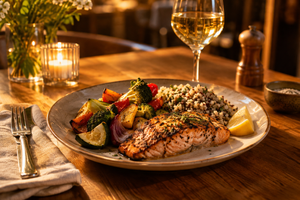
- Dinner: Grilled or roasted protein, vegetables, and one satisfying starch.
- Plant-based meal: Beans, lentils, tofu, or nuts paired with vegetables and grains.
- Lighter option: Soup or salad with added protein and dressing served separately.
- Indulgent order: A favorite entrée alongside a vegetable side and a drink that suits the occasion.
Make Room for Enjoyment
A balanced restaurant meal should feel realistic, not restrictive. Start with vegetables when you can, add protein, choose a carbohydrate that supports your appetite, notice the cooking method, and adjust the portion as needed. Over time, flexible habits matter more than making any single restaurant meal perfect.
Read More : Kitchen Scale Use in Daily Life: Easy Way to Measure Food Accurately